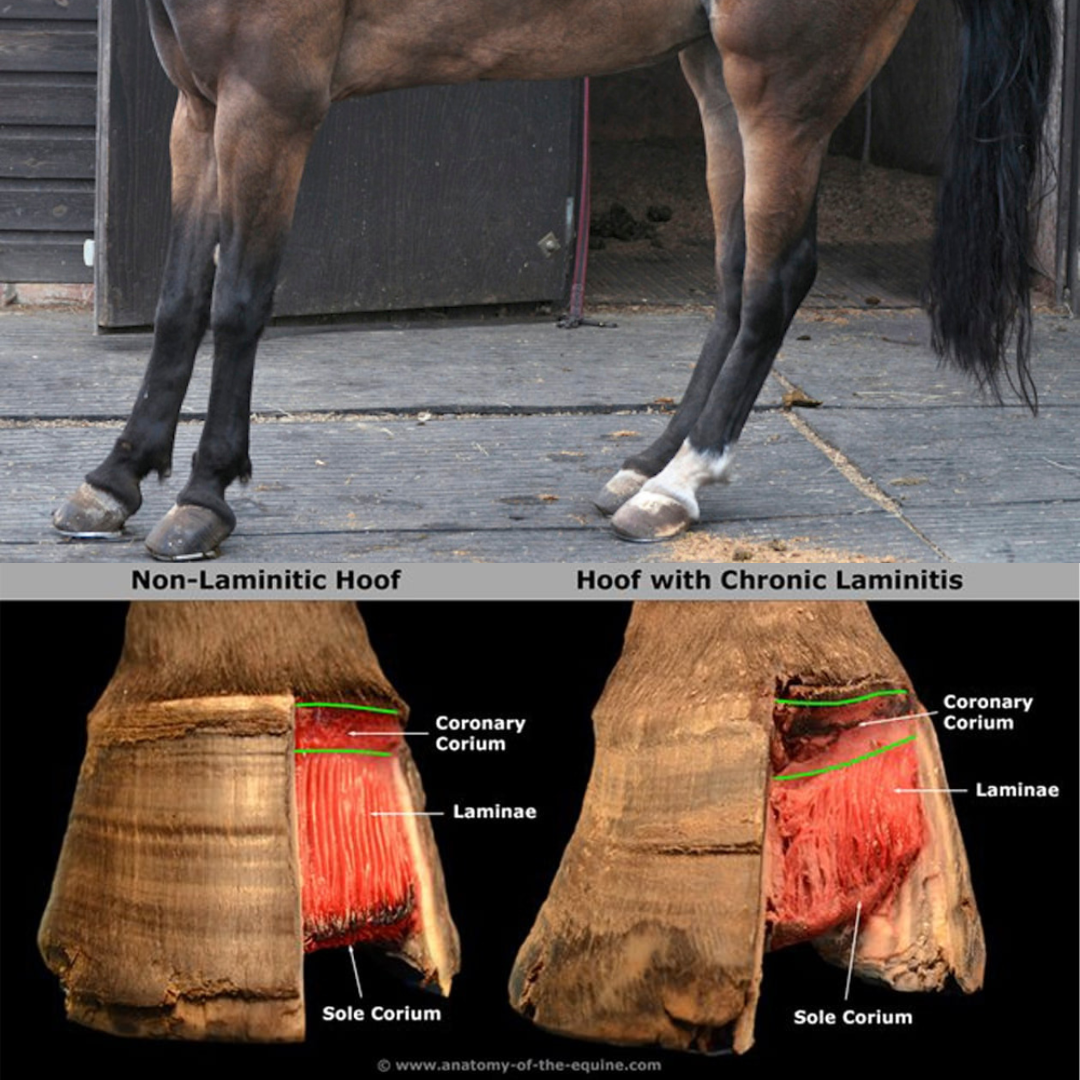
As the weather has now improved and horses are being turned out for longer, we need to think about laminitis.
There are a number of causes of laminitis – inflammatory (retained foetal membranes, systemic disease, grain overload), supportive limb laminitis and by far and away the most common cause we see are the endocrine cases (Cushings and equine metabolic syndrome).
The clinical laminitis signs to look for are:
– Shortened stride or a stiffened gait
– Reluctance to turn
– Weight shifting from foot to foot
– Reluctance to pick up their feet
– Change in demeanour and behaviour
– Warm feet and raised digital pulses
Some cases can be so painful that the horse sweats and shakes or is recumbent.
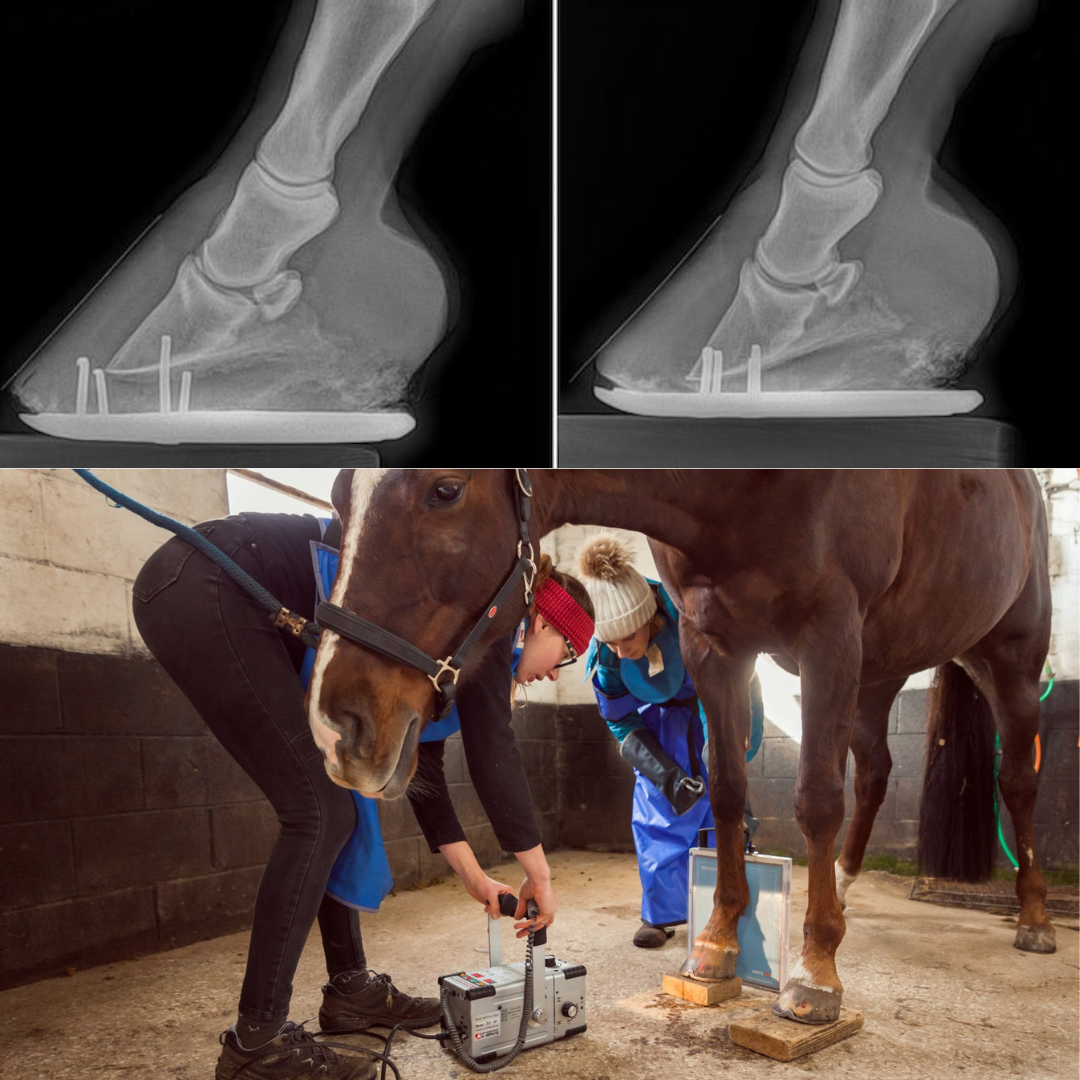
Diagnosis is made based on clinical signs and radiography. The horses should have the primary disease (systemic disease, grain overload, endocrine etc) treated alongside the treatment for laminitis which includes anti-inflammatories such as bute and paracetamol and digital support. Horses are on strict box rest with deep bedding due to the instability of the pedal bone in the foot and given a restricted diet. A lot of the cases we see are overweight and therefore the feed should be restricted to 1.5% of the target body weight per day. Soaking the hay reduces the calorific content of the hay but also removes the vitamins and minerals and therefore a low-calorie balancer should be fed alongside the hay.
We work very closely with your farrier, using X-rays to guide trimming the feet initially before using different types of shoes when necessary. Ultimately prevention of laminitis is crucial and the management of obesity is easier and cheaper than the management of laminitis. Restrict grazing by strip grazing, using a track system, a grazing muzzle or reducing the time out at grass. Try and get on top of your horse’s weight now before the flush of grass and it will make it easier to control when the grass does come through. Exercise your horse so they burn more calories than they consume. Diagnosing and treating any underlying endocrine disease is also cheaper and easier than treating laminitis.