Whilst many horse owners are battling to get their horses to lose weight, we are sometimes presented with cases of undesired weight loss and poor body condition scores. There are many factors which can lead to weight loss, I usually divide them into broad categories and then filter them down based on discussions with owners and my clinical examination of the horse.
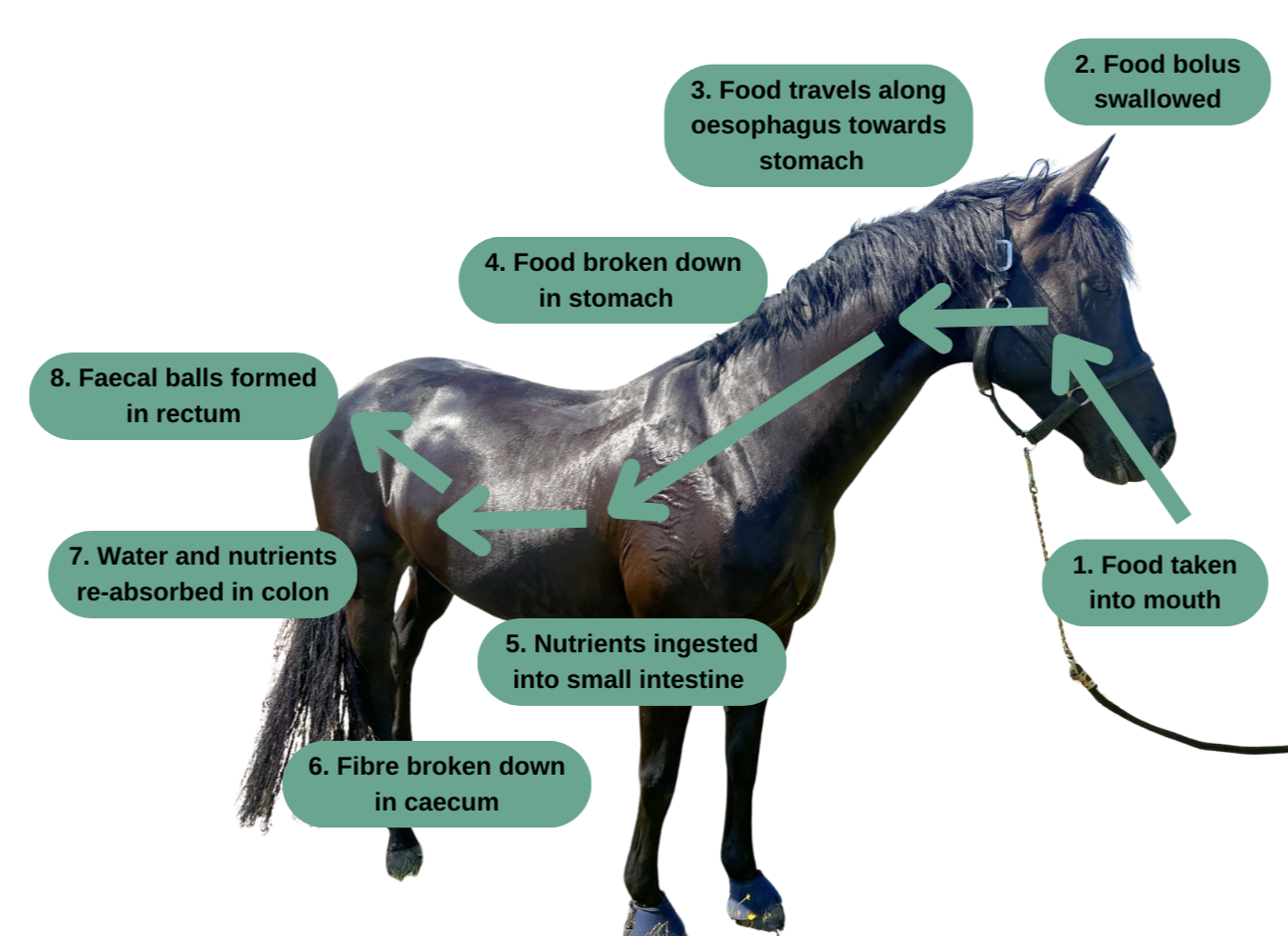
Firstly, let us discuss the horse’s digestive system and from there we can think about where problems may occur. A horse takes food into their mouth using their incisors to cut forage. Their tongue helps to guide food towards the back of the mouth, where their molars will grind the food into smaller particles. This grinding process mixes broken-down food with saliva to form a food bolus. The food bolus is then swallowed into the oesophagus and with the help of peristalsis (muscle contractions) it travels to the stomach. The stomach continuously secretes hydrochloric acid to aid in the further breakdown of food into smaller particles. Some proteins and fats are digested in the stomach, however, very little nutritional absorption occurs in the stomach. From the stomach, food will pass through the pylorus into the small intestine. The majority of absorption of nutrients occurs within the small intestine. Non-digested food matter, including fibre and water, continues its journey into the large intestine. The large intestine includes the caecum, large colon, small colon and rectum. The caecum is a comma-shaped structure which can hold a volume of up to 35 litres! The caecum contains bacteria known as gut flora which break down fibre. From the caecum, broken-down food will travel into the colon. Water and electrolytes are reabsorbed in the colon and any waste food matter will pass into the rectum, where faecal balls will form, ready to be expelled.
Undesired weight loss – what could be going wrong?
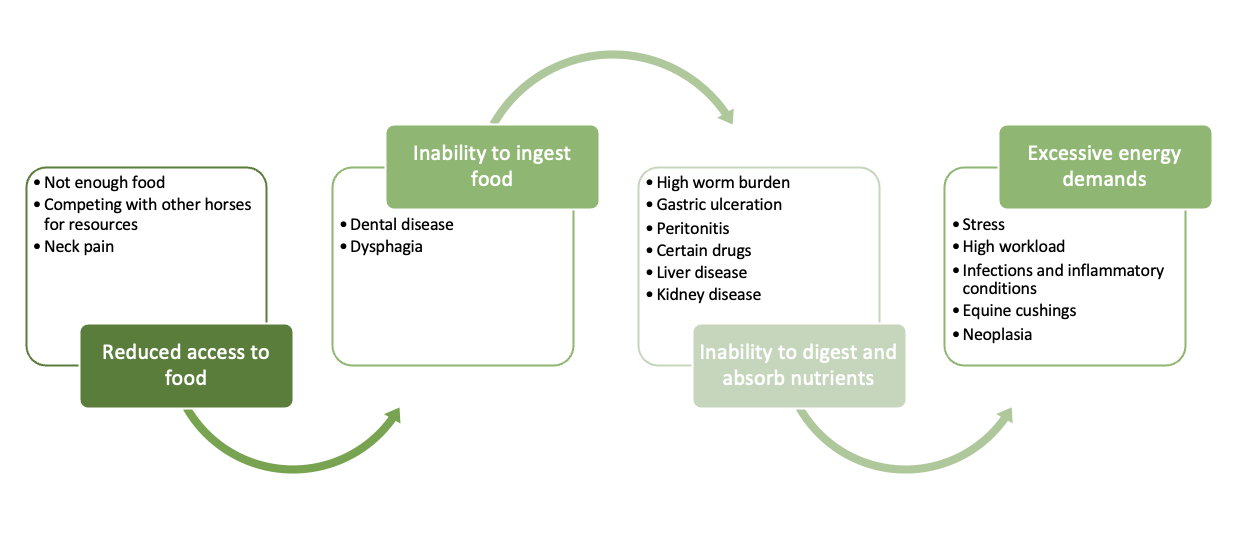
The first category is reduced access to food.
- This can include overgrazed poor fields or not enough access to supplementary feeding.
- This can also be caused by other horses competing for resources and chasing one off of the ‘good bit of grass’.
- In some cases, we see horses which are unable to access food because of pain and arthritis. Some older horses get neck pain, which physically stops them from moving their neck or extending it to the floor.
The second category is related to the ability to ingest food.
- Dental disease is a very common cause of weight loss in horses. If a horse has dental disease they may find chewing food painful and then spit boluses of food out, known as quidding. If a horse is quidding, you may notice balls of partly chewed food near where they are eating.
- A horse may also have difficulty swallowing, known as dysphagia. These horses may also quid or have episodes of choke.
The third category is the inability to digest food and absorb nutrients.
- This is usually frequently caused by worms. High worm burdens can damage the lining of the intestine, making it unable to efficiently absorb nutrients. In some cases, the damage to the intestinal wall can lead to protein leakage. Because of this protein loss we sometimes see horses with oedema/swelling on the underside of their abdomen.
- Peritonitis is an infection of the inner lining part of the abdomen, which can also affect the effectiveness of absorption within the gastrointestinal tract, as protein is leaked into the abdomen.
- Gastric ulceration can affect the lining of the stomach and small intestine causing a reduction in food absorbed.
- Certain drugs may also cause damage to the intestinal wall.
- Liver disease can cause weight loss as nutrients absorbed from the gastrointestinal tract pass to the liver, where they are further processed. If the liver is diseased and unable to process the nutrients they will then remain in the blood and eventually be excreted.
- Kidney disease can also cause weight loss as nutrients are lost in the urine.
The fourth category is excessive energy demands.
- This means that the horse is successfully able to absorb nutrients from the food it is getting, however, there is some other element demanding more energy and nutrients than the horse is taking in
- This can include stress. This may be environmental such as weather or unsettling environment. This could also be stress from chronic pain or orthopaedic pain.
- Horses in lots of work which is not fed appropriately. E.g. a fit racehorse being fed on poor-quality hay alone.
- Infections and inflammatory conditions can increase a horse’s metabolic rate and therefore increase energy demands.
- Pituitary pars intermedia dysfunction or more commonly known as Equine Cushings, can lead to an increase in catabolic metabolism, and therefore cause weight loss.
As you can see, there is a huge range of causes of undesired weight loss in horses! My initial steps when presented with these cases would be to take a full history from the owners and discuss what they think the cause may be. While we are vets, the opinion of owners who know their horse/s inside out is very valuable! I would then perform a thorough clinical examination including an examination of the mouth. Further diagnostic testing depends on clinical signs but may include worm egg counts, blood tests, gastroscopy, abdominal ultrasonography, or taking an abdominal fluid sample.
Treatment and prognosis depend on the cause of weight loss.
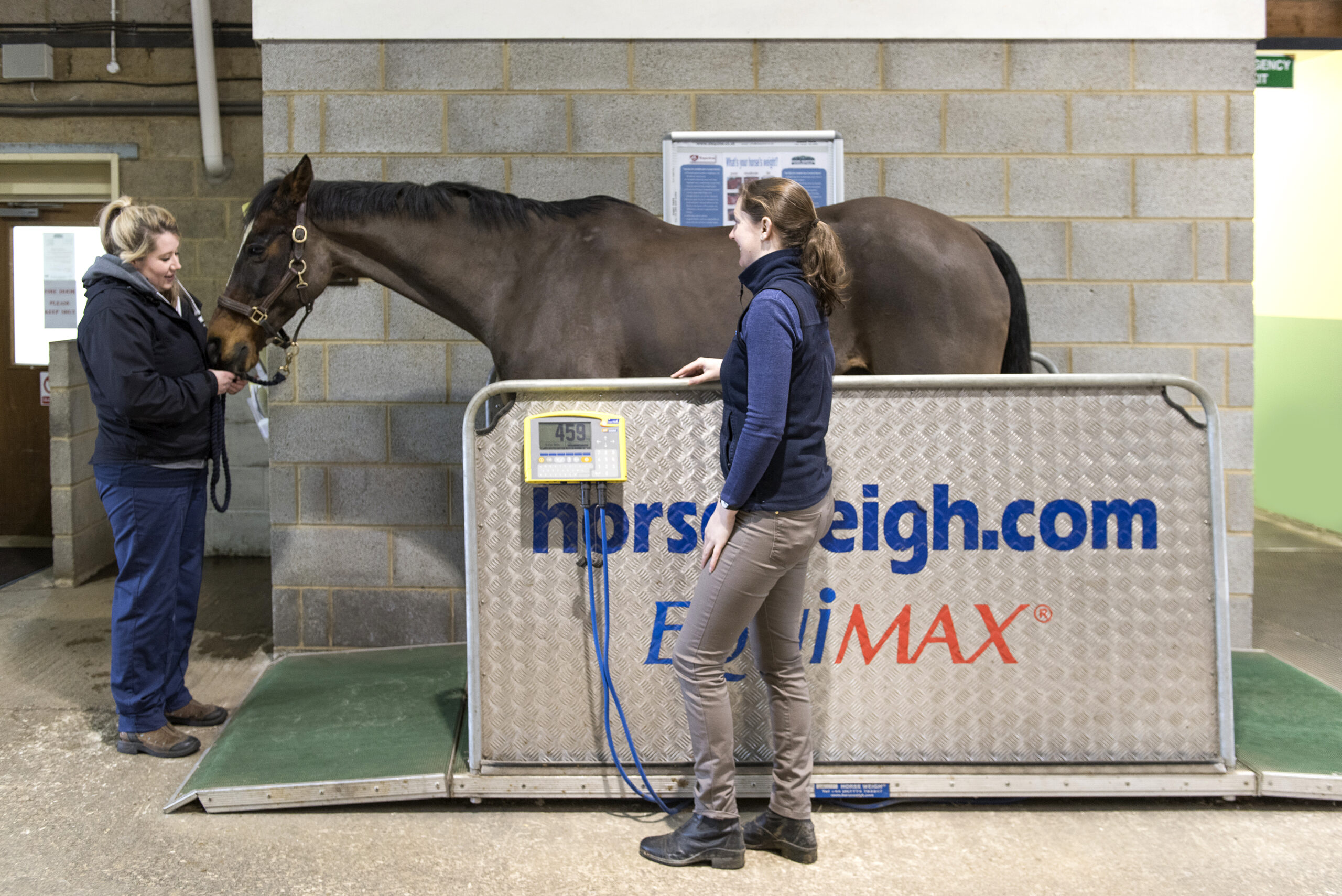
If you are concerned about your horse’s weight, you can pop in to get your horse weighed here at our Hook Norton Hospital branch. Please contact us on 01608 730085 or take a look at our website for how else we can help.
Undesired weight loss by Sarah Thornton
|