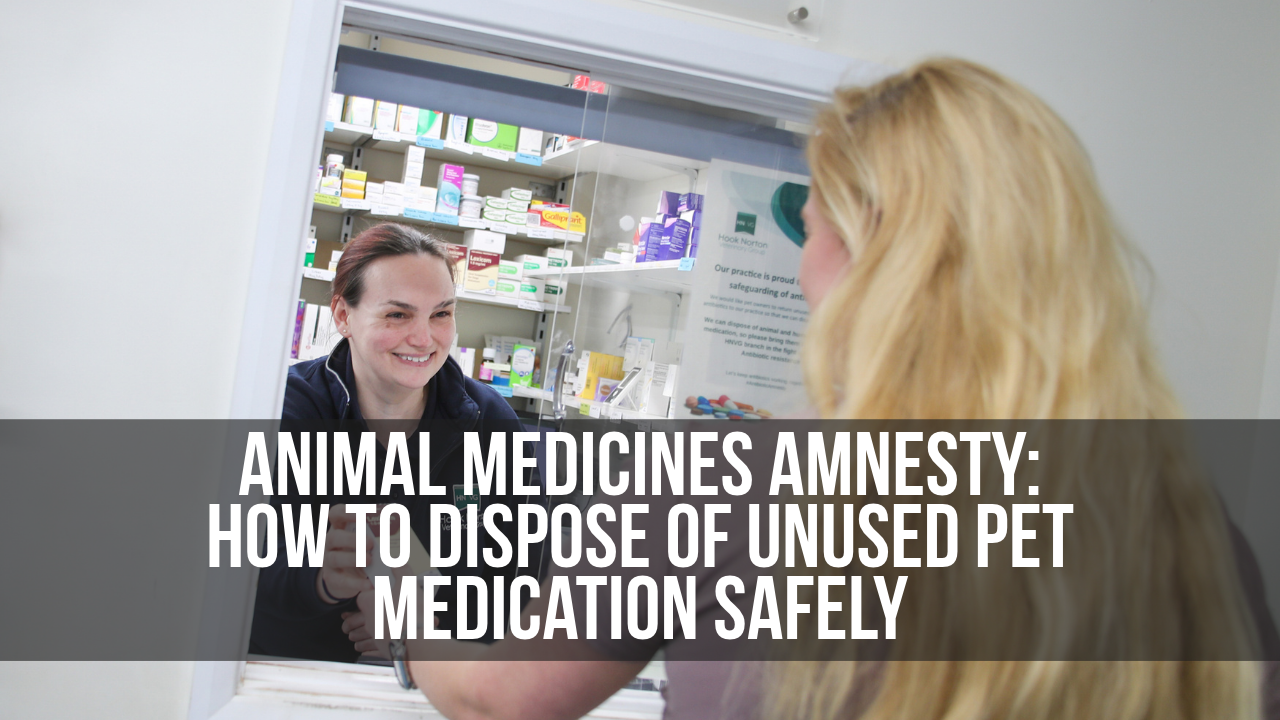
Throughout November, we are supporting the Animal Medicines Amnesty, encouraging pet owners to return any unused or out-of-date veterinary medicines to their veterinary practice for safe disposal.
Whether you have leftover antibiotics, flea and worming treatments, pain relief or other prescribed medication, it is important to make sure these medicines are disposed of responsibly.
But why does it matter, and what should you do with medication you no longer need?
What is the Animal Medicines Amnesty 2026?
The Animal Medicines Amnesty is an initiative that encourages responsible use and disposal of veterinary medicines to protect animal health, human health and the environment.
Veterinary medicines play an important role in keeping our pets healthy, but problems can arise when medication is used incorrectly, kept for future use or disposed of inappropriately.
Returning unused or out-of-date medicines to your veterinary practice helps ensure they are disposed of safely, reducing the risk of environmental contamination and accidental misuse.
Getting involved is simple: check your medicine cupboard for any veterinary medication you no longer need and bring it back to your local veterinary practice.
Why is responsible antibiotic use so important?
Antibiotics are an important part of veterinary medicine, helping to treat bacterial infections in animals. However, using them when they are not needed, or not using them as prescribed, can contribute to antimicrobial resistance (AMR).
Antimicrobial resistance occurs when microorganisms, such as bacteria, develop the ability to survive treatments that would normally kill them or stop them from growing.
This means that antibiotics can become less effective, making infections harder to treat. In some cases, infections may become much more difficult to manage, putting both animal and human health at risk.
Everyone has a part to play in tackling antimicrobial resistance, including pet owners.
You can help by:
- Only giving your pet antibiotics when they have been prescribed by a veterinary professional.
- Following the prescribed dose and treatment instructions carefully.
- Never sharing medication between pets.
- Never keeping leftover antibiotics for another occasion.
- Returning any unused antibiotics to your veterinary practice for safe disposal.
Are antibiotics always necessary for pets?
Not every illness or infection requires antibiotic treatment.
Your vet will assess your pet’s symptoms and overall health before recommending the most appropriate treatment.
For example, many cases of kennel cough, cat flu, acute diarrhoea and cat bite abscesses may not require antibiotics, depending on the underlying cause and clinical findings.
Antibiotics only work against bacterial infections, so they will not help with illnesses caused by viruses or other non-bacterial conditions.
Avoiding unnecessary antibiotic use is an important way to help slow the development of antimicrobial resistance and preserve these essential medicines for when they are genuinely needed.
If your pet has been prescribed antibiotics, always follow your vet’s instructions and contact the practice if you have any questions about their treatment.
How should you dispose of unused or out-of-date pet medication?
If you have veterinary medicines left over at home, the safest option is to return them to your veterinary practice.
Please remember:
DO:
- Check your cupboards regularly for unused or out-of-date pet medication.
- Return unwanted veterinary medicines to your veterinary practice for safe disposal.
- Keep medicines stored safely and out of reach of children and animals until you can return them.
DON’T:
- Put unused veterinary medicines in your household rubbish.
- Flush medication down the toilet or pour it down the sink.
- Give leftover medication to another pet, even if they appear to have similar symptoms.
- Use out-of-date medication or keep leftover prescriptions for future illnesses.
Incorrect disposal can allow pharmaceutical substances to enter the environment, potentially contaminating soil and waterways.
Keeping leftover medication for future use can also put your pet at risk, as the medicine may no longer be appropriate for their condition, weight or health needs.
Responsible use of flea, tick and worming treatments
Antibiotics aren’t the only veterinary medicines that need to be used responsibly.
Parasiticides, including flea, tick and worming treatments, are important for protecting pets against parasites. However, their use and disposal also need careful consideration.
Your veterinary team can help you choose appropriate parasite protection based on your pet’s lifestyle, health, exposure risks and local parasite prevalence.
There are also some simple steps you can take to reduce environmental contamination:
- Follow the product instructions carefully when applying spot-on treatments.
- Apply treatments indoors where possible.
- Avoid allowing recently treated pets to swim or bathe, following the product-specific guidance.
- Dispose of empty packaging, applicators and treatment containers responsibly.
- Never wash medication residues or packaging down drains.
Using parasite treatments appropriately helps protect your pet while also considering the wider environment.
How can you support the Animal Medicines Amnesty?
Taking part couldn’t be easier.
Have a look through your pet’s medicine cupboard. If you find any unused, unwanted or out-of-date veterinary medication, bring it back to us at HNVG.
Our team can ensure it is disposed of safely and appropriately.
Responsible medicine use starts at home, and even a small action can make a difference.
Together, we can help protect our pets, preserve the effectiveness of essential medicines and look after the environment.
Have some unused pet medication at home? Bring it back to your local HNVG practice for safe disposal.