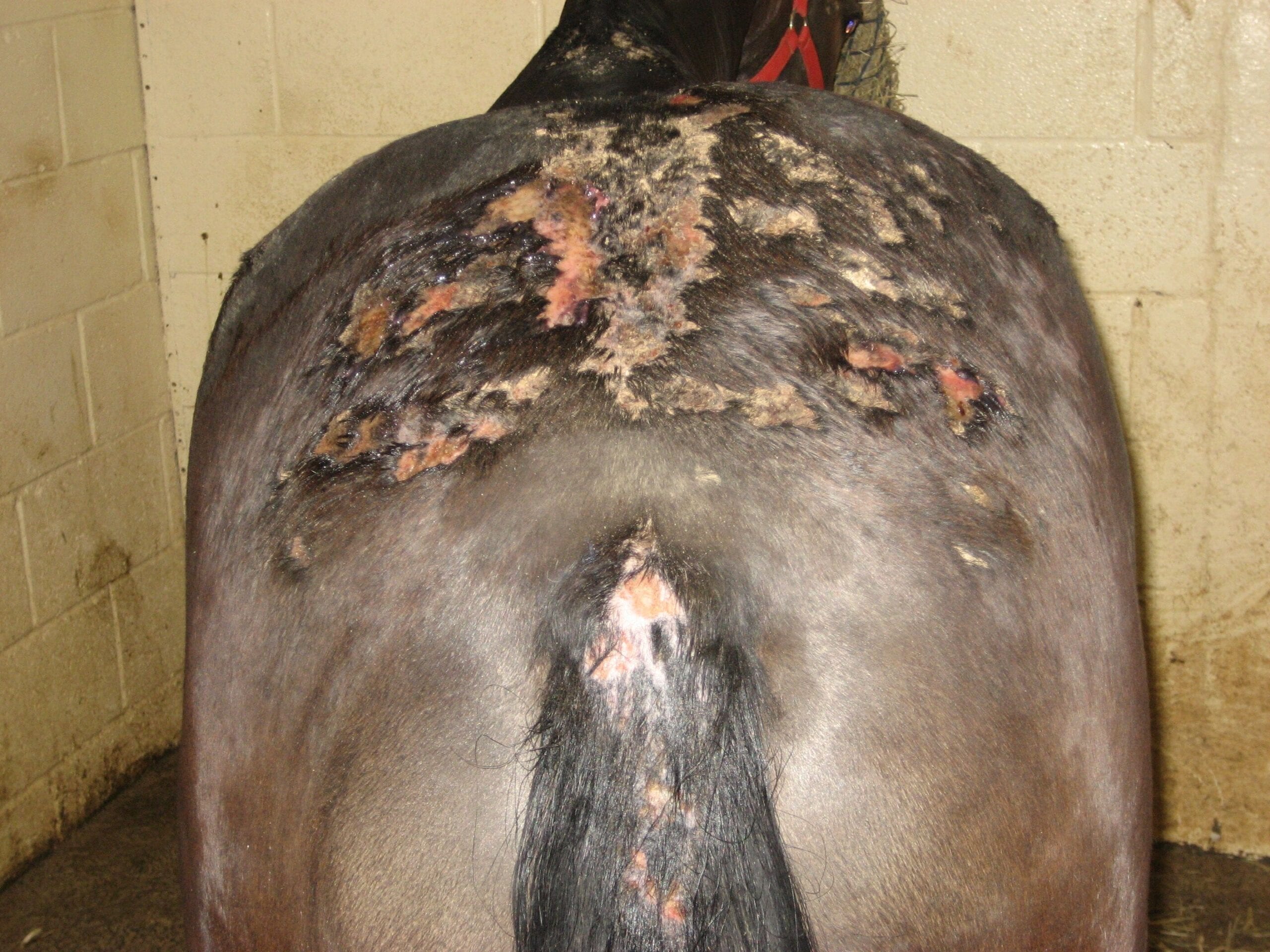
Yes, it’s already time to be thinking about Sweet Itch in your horses and ponies!
What is Sweet Itch?
Sweet itch is caused by an allergic response to midge saliva – however other insect bites can also provoke an allergic response. When an allergic or hypersensitive horse is bitten by a midge, the midge’s mouthparts leave a small amount of saliva behind. The proteins in the saliva are recognised by the horse’s immune system as ‘foreign’, and an immune response against the saliva proteins begins. In sweet itch horses, the immune response is excessive, causing severe itching and sometimes hives as well. Sweet itch can be a major welfare concern – imagine being constantly so itchy that you scratch until you bleed!
Which horses get Sweet Itch?
It is thought that between 3% and 12% of horses in the UK are affected by Sweet Itch to some extent. Native pony types and cobs are most commonly affected, and there is a hereditary component to the disease. Most cases will start to show symptoms at between 2 and 4 years old.
What are the symptoms?
An itchy horse naturally wants to scratch, and very quickly can rub themselves raw, leaving bald, oozing sores prone to secondary infection. Over time the irritated skin becomes thickened and scaly, leaving a corrugated appearance.
The areas worst affected are the areas where midges prefer to feed – face, along the mane and topline to the tail, and the midline of the belly.
Symptoms are seen at any time of year when midges are active – the exact beginning and end of the ‘midge season’ will depend on when temperatures start to rise in Spring, and when the temperature falls again in the Autumn. As a rule of thumb, most insects will be active when the daytime temperature consistently reaches 10°C or more, usually late March to mid September.
Progression year on year
Like other allergic conditions, Sweet Itch tends to get worse as the horse gets older. This is because the immune response against the midge saliva has a ‘memory’ – it remembers it’s ‘enemy’ and keeps a constant watch ready to battle it again. The effect of this is that every midge season, the over-reaction of the immune system to midge bites gets worse and worse, and the symptoms become harder and harder to control. Rapid and effective treatment of allergic episodes, and careful management to prevent midge bites help to slow the progression and keep the Sweet Itch under control.
Treatment
Like most allergies, the symptoms are most easily controlled using steroids and soothing lotions and creams such as benzyl benzoate. However, like most diseases of any sort, prevention is better than cure! By the time we see clinical signs each year, the cycle of itch and scratch is already established and can be very hard to break.
The most important factor in preventing Sweet Itch is preventing midge bites.
>> Full-body fly rugs and masks
>> Fly repellents
>> Avoid turnout in early morning and early evening when midges are active
>> Avoid grazing near hedges, woods , damp areas and stagnant water where midges breed
>> Prevent midge access to stables with netting and fans
For these strategies to be most effective, it is essential that they are put in place BEFORE midges become active! This means you need to start thinking about Sweet Itch now, before the weather warms up!
Other treatments can help damp down the immune response to limit the allergic response if midges do get past the defences. These include nutritional supplements and removing alfalfa from the diet. Some cases are made worse by other allergies, such as to certain types of food. The more things a horse is allergic to, the lower its ‘allergic threshold’ – the point at which it starts to show symptoms. Avoiding as many allergens as possible will help keep itchiness under control.
For more information about Sweet Itch and allergy testing, speak to one of our Equine Vets!
Written by Equine Vet, Sally Hodgson. BSc (Hons), MA, VetMB, Cert AVP (EM), MRCVS.