Under the AIPZ in England, specific housing rules apply depending on the number of birds you keep and what you do with their products:
-
If you have more than 50 birds:
You must house them, regardless of the species or purpose. -
If you keep fewer than 50 birds for your own use only:
You are not legally required to house them, as long as you do not sell or give away eggs, meat or live birds. -
If you keep fewer than 50 birds but sell or give away eggs, meat or live birds:
You must house them, as these are classed as ‘poultry’ under current legislation.
Further details can be found in the official AIPZ declaration for England. It is vital to ensure your set-up complies with the regulations, as failure to follow the housing order is an offence.
Remember to Register as a Keeper of Birds
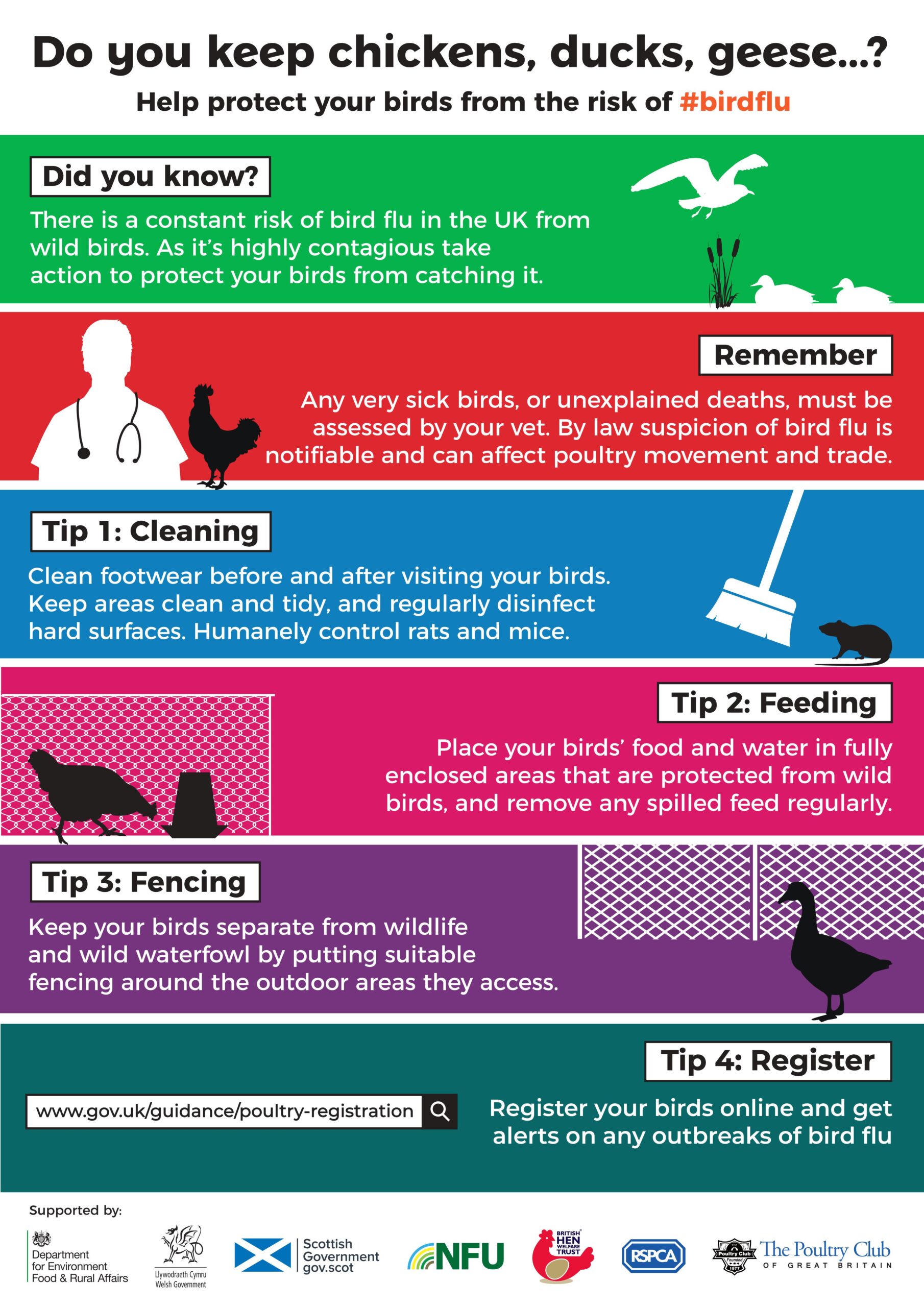
All bird keepers, regardless of flock size, must register within one month of keeping poultry or other captive birds at any premises in England or Wales. Not registering is breaking the law. Registration ensures you receive essential updates and disease alerts as they happen.
Biosecurity Requirements
Excellent biosecurity remains the most effective tool in preventing avian influenza. Key advice, including how to stop wild bird contamination, can be found in the official government guidance. This includes securing feed and water, disinfecting footwear, reducing visitor access, and preventing any contact with wild birds, especially waterfowl.
You can also use the government’s disease control zone map to check whether your premises fall within a restricted area.
Housing & welfare of housed birds.
Check if you need a licence to move poultry, poultry by-products, eggs, material or mammals
APHA report for cases in wild birds.
Avian Influenza Updates
For the latest area-specific confirmed outbreaks, please visit the APHA website here.
What This Means for Poultry Keepers
The diversity of affected flocks, ranging from commercial farms to small hobby collections, shows how easily avian influenza can spread. As we move through the high-risk winter period, all keepers should:
-
Review and strengthen biosecurity immediately
-
Prevent contact with wild birds
-
Keep feed, bedding and water fully protected
-
Monitor for signs of illness and report suspicions promptly
Guidance for those who keep or manage game birds is also available separately.
This is a rapidly evolving situation. If you need tailored advice on biosecurity, housing measures or disease prevention, please contact us; we are here to help.