A horse’s normal body temperature is between 37°C and 38°C. When a horse exercises, the muscles produce heat which can lead to heat stress when combined with hot environmental temperatures. Very high body temperatures (those exceeding 41°C) can lead to heat exhaustion and, in worst-case scenarios, fatality. So with environmental temperatures increasing through the summer, how can we cool horses following exercise?
What do you need?
> Numerous buckets of cold water
> Sponges
> At least one, but ideally 2 willing assistants.
How to cool
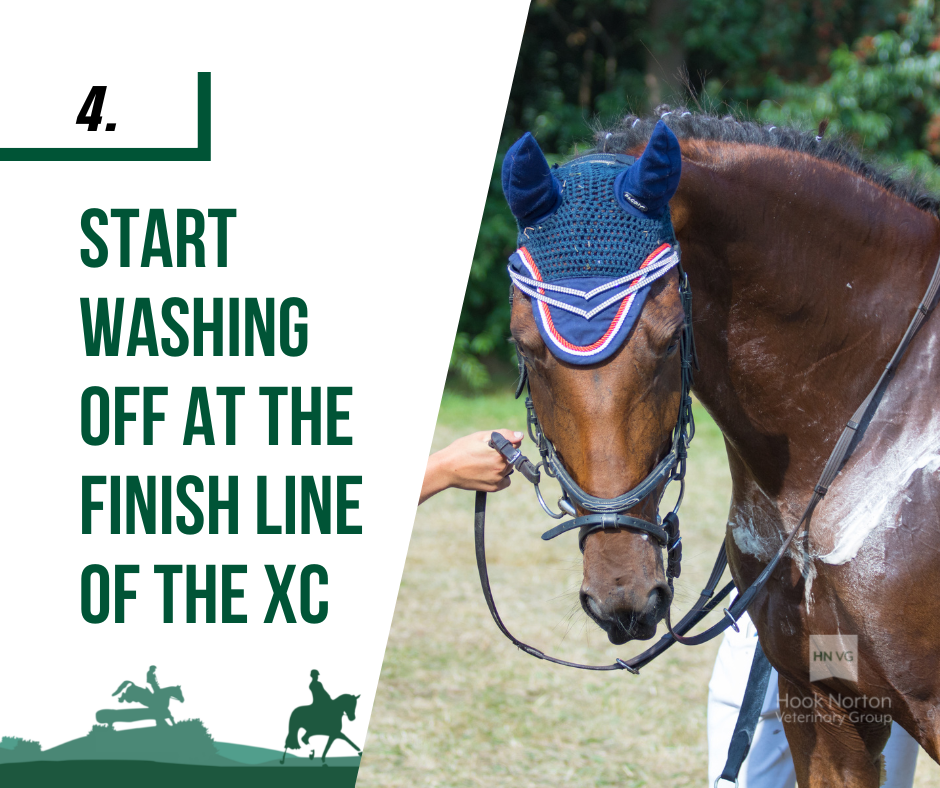
When pulling up after cross country, jump off and start walking immediately. If possible, start cooling the hind-quarters even before the saddle has been removed. There are large muscles in this area, which means a large amount of heat is produced here.
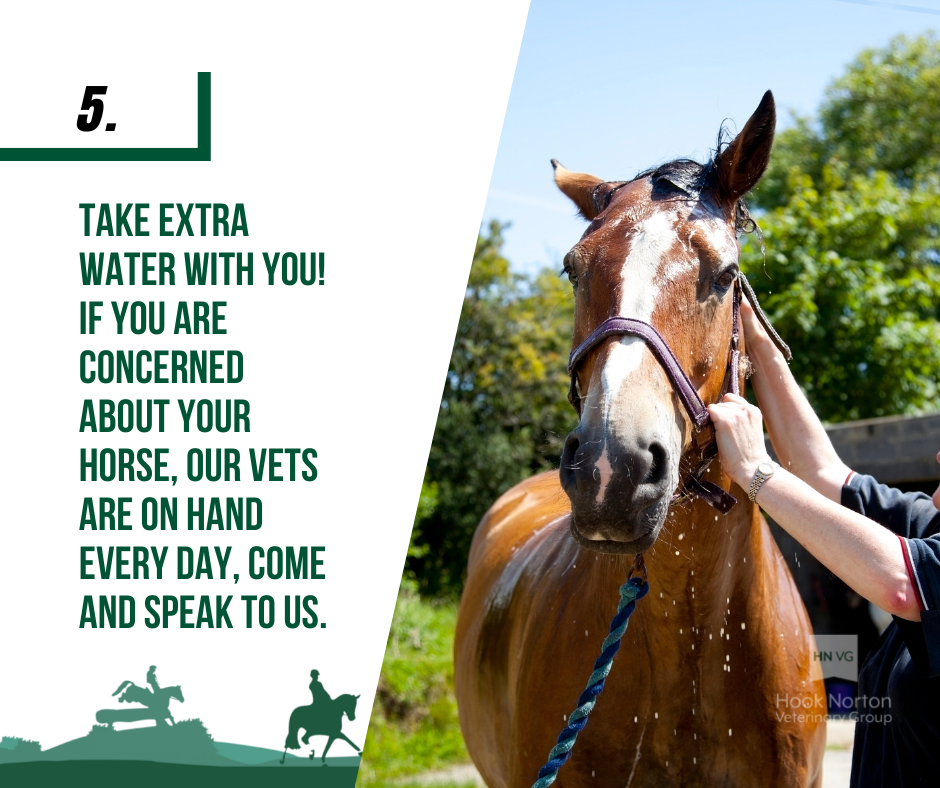
Apply large volumes of cold water over all parts of the body, paying particular attention to the hind quarters. Scraping between buckets is not necessary; it is more important to continue applying cold water. However, if you wish to scrape the excess water, do so every 30 seconds between walking and active cooling with buckets of water. The walking and cooling sequence is essential. Walking promotes air movement over the body to allow for water evaporation whilst walking encourages blood flow to the skin to increase the cooling effectiveness.
Stop cooling once the muscle over the hindquarters are cool to touch and the horse’s respiratory rate is less than 24 breaths per minute.
Don’ts
> Don’t place wet towels over a horse. Once these have warmed they act as insulation and prevent heat loss.
> Don’t place ice packs on your horse, this causes constriction of the blood vessels in the skin and prevents cooling
> Don’t let horses stand still for excessive periods of time
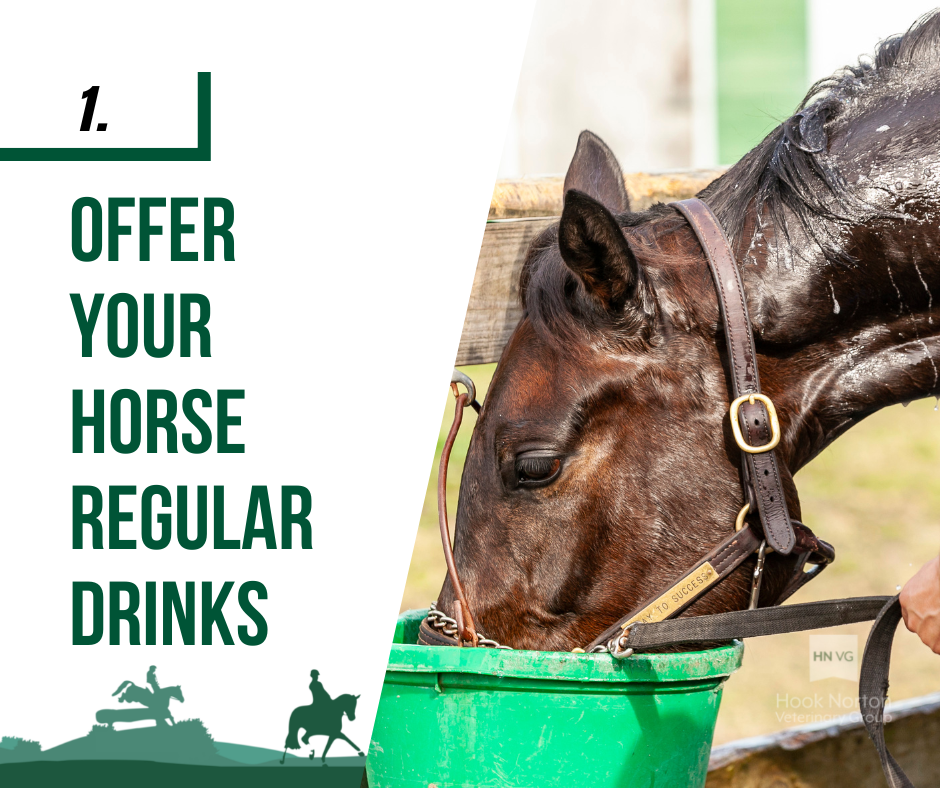
> Don’t prevent your horse from drinking small amounts of water during the competition (1/2 bucket), small amounts little and often will help keep your horse hydrated through the day.
Do monitor for signs of heat exhaustion
> Unusual behaviour or change in the demeanour of your horse (Quiet if usually fresh, or fresh if usually quiet etc.)
> Muscle Spasms
> Wobbly
> Increased rectal temperature
> Slow recovery
Remember it is very difficult to over-cool your horse! If you are concerned in any way, contact the onsite veterinarian immediately.