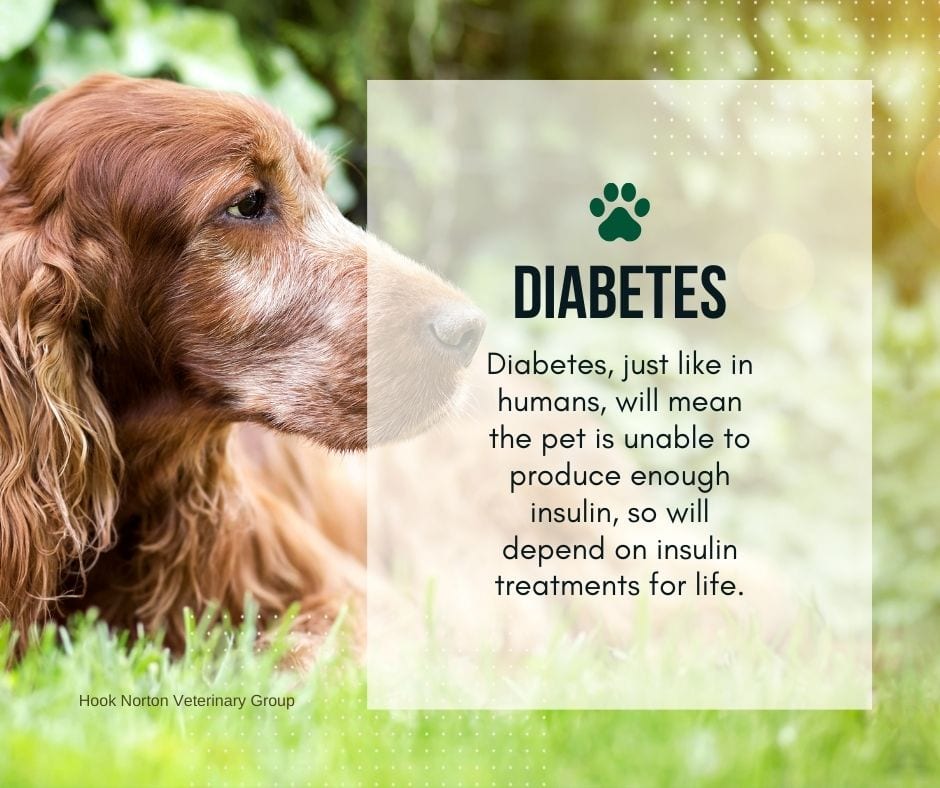
Diabetes
May 13, 2021 | by Charlie Hands | Pets
Did you know it is estimated around 1 in 200 cats and 1 in 300 dogs have diabetes mellitus?
Diabetes mellitus occurs when then the pancreas doesn’t produce enough insulin to control the level of glucose that is in the bloodstream, this can be either because the body doesn’t produce the insulin or because the body has become resistant to it. This results in the patient being hyperglycaemic (raised blood glucose), and if prolonged can lead to some very serious conditions such as kidney damage, eye damage such as cataracts (in severe instances blindness) and changes to the blood PH.
Although not curable, diabetes is often successfully managed in both canine and feline patients. This is done using insulin therapy and dietary management. This does involve dedication from the owners but results in the pet being able to lead a fulfilled life.
What are the signs of diabetes in my pet?
> Excess thirst and urination
> Excessive hunger (but weight loss and poor body condition)
> Dull coat
> Lethargy
> Cloudiness to the eyes
What increases my pet’s risk of diabetes?
> Middle aged-senior pets
> Unspayed (entire) females
> Obesity
> Some breeds are predisposed to diabetes
If you suspect your pet is diabetic, we will perform a physical examination and discuss the clinical signs you are seeing. We will then perform a urine test to check for the presence of ‘glucose’ and ‘ketones’ in their urine. If these are present the next step is a blood test to test the level of glucose within the blood.
If indicated, we would then need to perform a ‘glucose curve’ to check your pet’s level of blood glucose at regular intervals throughout the day (they would need to stay with us in the hospital for the day). From this curve, we would be able to determine a dose of insulin to begin treatment with. This would then involve talking through how to inject and manage your pet at home. Regular checkups would be required initially whilst we are ‘stabilising’ them and finding the best regime for your pet.
Written by Charlie Hands
Marketing Executive
Back to news